In this article
Nha sĩ nào cũng dặn dùng kem đánh răng có fluor, nhưng vỏ hộp lại đầy con số và tên hóa học: 1.000 hay 1.450 ppm, natri fluorid hay MFP, chưa kể loại kê đơn 5.000 ppm. Dưới đây là cách fluor bảo vệ răng, nồng độ nên chọn, cách đọc nhãn và tranh luận về an toàn.
Fluor trong kem đánh răng hoạt động thế nào?
Sau mỗi lần ăn đồ ngọt, axit do vi khuẩn tạo ra làm men răng mất khoáng, rồi nước bọt giúp men bồi khoáng trở lại. Theo tổng quan của Buzalaf và cộng sự (2011), fluor tác dụng chủ yếu tại chỗ (PubMed):
- Hạn chế mất khoáng: lượng fluor nhỏ, duy trì liên tục trong nước bọt làm men chậm hòa tan khi gặp axit.
- Đẩy nhanh tái khoáng: khi pH trở lại bình thường, khoáng chất lắng đọng nhanh hơn và lớp khoáng mới bền với axit hơn.
- Tác động lên vi khuẩn: fluor ức chế vi khuẩn Streptococcus mutans tạo axit trong phòng thí nghiệm, nhưng ý nghĩa thực tế trong miệng chưa rõ.
Vì vậy, giữ fluor lưu lại trên răng quan trọng hơn lấy nhiều kem.
Bằng chứng giảm sâu răng
Tổng quan Cochrane của Walsh và cộng sự (2019) gộp 96 nghiên cứu. Ở trẻ em và thanh thiếu niên, kem 1.000–1.250 ppm và 1.450–1.500 ppm đều giảm sâu răng so với kem không fluor, mức 1.450–1.500 ppm nhỉnh hơn một chút. Ở người lớn, kem 1.000–1.100 ppm cũng giảm sâu răng (3 nghiên cứu, 2.162 người được đánh giá, bằng chứng mức trung bình). Tác dụng phụ ít và nhẹ (PubMed).
Nên chọn kem đánh răng có fluor bao nhiêu ppm?
ppm (phần triệu) cho biết hàm lượng fluor: 1.000 ppm là 1 mg fluor trong 1 g kem. Bộ hướng dẫn Delivering Better Oral Health (DBOH) của Chính phủ Anh, cập nhật tháng 9/2025, nêu các mốc sau (GOV.UK):
- Mức có bằng chứng: từ 1.000 ppm trở lên ngừa sâu răng với mức chắc chắn trung bình đến cao.
- Người lớn và trẻ từ 7 tuổi: 1.350–1.500 ppm; ở Anh, kem bán tự do tối đa 1.500 ppm.
- Kem kê đơn 2.800 ppm: người từ 10 tuổi nguy cơ sâu răng cao, như đang sâu răng, ăn nhiều đường hoặc dùng thuốc dễ gây sâu răng.
- Kem kê đơn 5.000 ppm: người từ 16 tuổi nguy cơ cao như sâu chân răng, khô miệng, mang hàm phủ, xạ trị vùng đầu cổ hoặc hóa trị; thường không dùng lâu dài.
Tổ chức Sức khỏe Răng miệng Anh (Oral Health Foundation) nêu mốc tương tự (Oral Health Foundation). Kem nồng độ cao cần nha sĩ đánh giá nguy cơ trước.
Cách dùng kem đánh răng có fluor đúng cách
Bốn bước sau áp dụng cho cả bàn chải tay và bàn chải điện:

- Chọn kem 1.000–1.500 ppm fluor: người lớn ưu tiên 1.350–1.500 ppm; nồng độ cao hơn chỉ dùng khi nha sĩ kê.
- Lấy lượng kem vừa đủ: người lớn và trẻ trên 3 tuổi cỡ hạt đậu, trẻ dưới 3 tuổi một lớp mỏng, theo Oral Health Foundation.
- Chải đủ 2 phút: để kem tới mọi mặt răng; kỹ thuật từng vùng có trong bài cách đánh răng đúng cách.
- Nhổ bọt, không súc lại bằng nước: DBOH ghi nhận không súc sau chải gắn với mức tăng sâu răng thấp hơn ở thanh thiếu niên.
Nước súc miệng có fluor nên dùng vào lúc khác, không ngay sau khi chải.
Cách đọc nhãn kem đánh răng có fluor
Tên các dạng fluor
Oral Health Foundation liệt kê ba dạng fluor trong kem đánh răng: natri fluorid (sodium fluoride, NaF), thiếc fluorid (stannous fluoride, SnF₂) và natri monofluorophosphat (sodium monofluorophosphate, MFP). Nhãn ghi “ppm F” là lượng fluor thực. Nếu chỉ ghi phần trăm hoạt chất, quy đổi gần đúng: NaF 0,32% ≈ 1.450 ppm; MFP 0,76% ≈ 1.000 ppm và 1,14% ≈ 1.500 ppm; SnF₂ 0,454% ≈ 1.100 ppm. ADA khuyên chọn sản phẩm có dấu chấp nhận ADA Seal, nghĩa là đạt tiêu chí an toàn và hiệu quả của hiệp hội (MouthHealthy – ADA).
Kem không fluor dành cho ai?
ADA khuyên luôn chọn kem có fluor; với trẻ nhỏ, Oral Health Foundation và DBOH cũng khuyên dùng kem có fluor với lượng rất ít. Trong các nguồn chúng tôi tham khảo, chưa hiệp hội nào coi kem không fluor là lựa chọn mặc định cho nhóm người nào. Nếu có lý do riêng để tránh fluor, hãy hỏi nha sĩ cách phòng sâu răng thay thế.
Fluor có an toàn không?
Nhiễm fluor răng ở trẻ nhỏ
Nhiễm fluor răng (fluorosis) xảy ra khi trẻ nuốt quá nhiều fluor lúc răng đang hình thành, thường là vệt trắng mờ trên men; theo Oral Health Foundation, tình trạng này thường nhẹ, không ảnh hưởng chức năng răng và ít gặp. Theo DBOH, nguy cơ ở răng cửa vĩnh viễn chỉ đáng kể trước khoảng 30 tháng tuổi, ở răng tiền hàm trước 6 tuổi, nên trẻ dưới 6 tuổi chỉ dùng rất ít kem. Lượng kem theo tuổi có trong bài bàn chải điện cho trẻ em.
Tranh luận về fluor trong nước máy
- Chương trình Độc chất học Quốc gia Mỹ (NTP, 8/2024): kết luận với mức tin cậy trung bình rằng phơi nhiễm fluor cao — nước uống trên 1,5 mg/L — có liên quan đến IQ thấp hơn ở trẻ em, chủ yếu từ nghiên cứu ngoài Mỹ. NTP chưa đủ dữ liệu về mức 0,7 mg/L, không thấy tác động lên người lớn và lưu ý liên quan không đồng nghĩa nhân quả (NTP).
- Hiệp hội Nha khoa Hoa Kỳ (ADA): coi mức fluor hóa nước 0,7 mg/L ở Mỹ là an toàn và hiệu quả (MouthHealthy – ADA).
- Tổng quan Cochrane 2024 (Iheozor-Ejiofor và cộng sự): khi kem fluor đã phổ biến, bổ sung fluor vào nước có thể chỉ giảm khoảng một phần tư răng sâu ở trẻ, bằng chứng mức thấp (PubMed).
- Tại Việt Nam: QCVN 01-1:2024/BYT ban hành kèm Thông tư 52/2024/TT-BYT giới hạn florua trong nước sạch sinh hoạt tối đa 1,5 mg/L (LuatVietnam); quy chuẩn có thể được sửa đổi, nên kiểm tra bản hiện hành.
Bàn chải điện dùng cùng kem có fluor
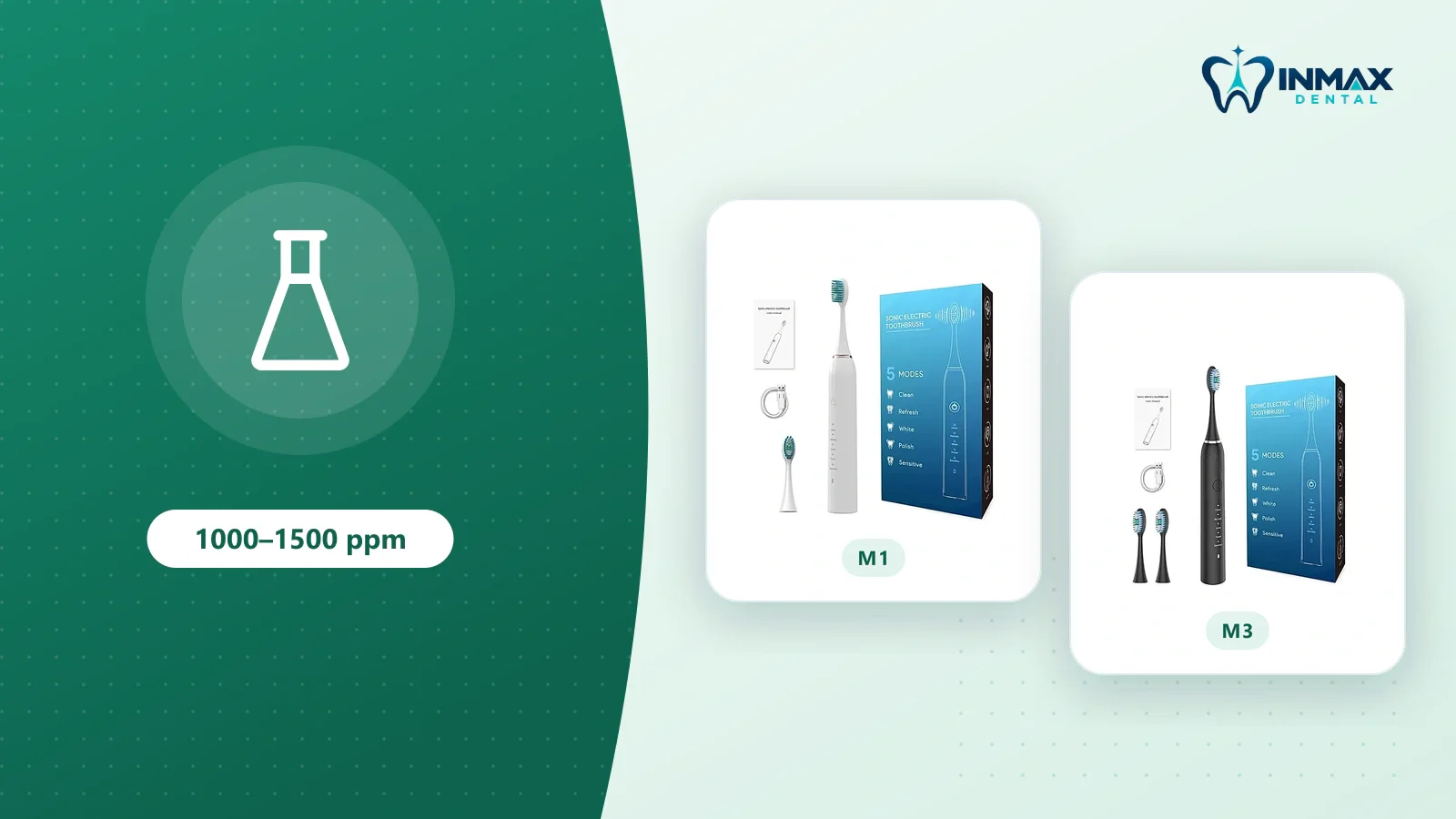
Bàn chải điện không thay đổi cách fluor tác dụng, nhưng giúp đưa kem đều tới từng răng. Hai mã Inmax dùng được với kem có fluor thông thường:
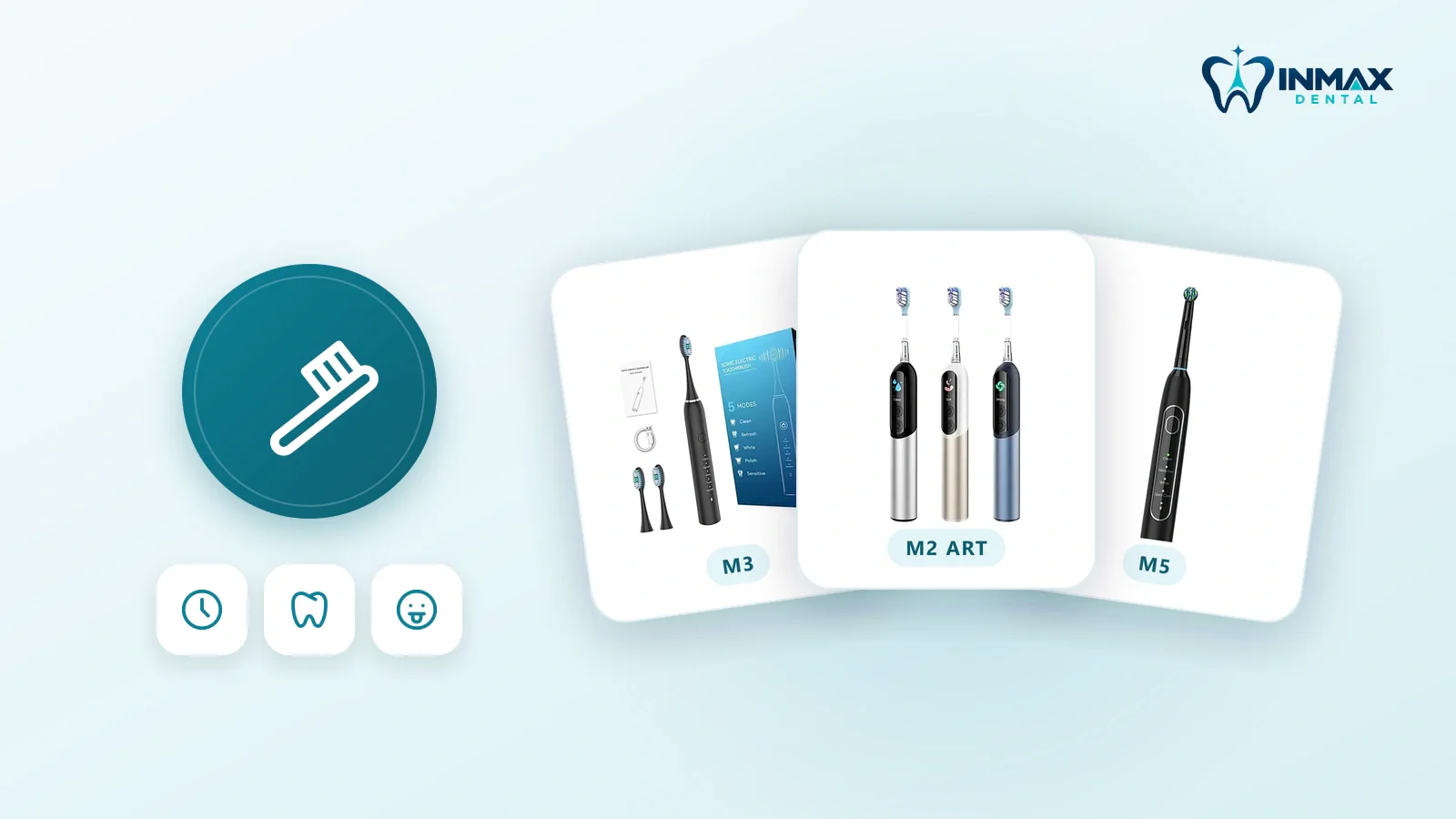
- M1: 120–140 Hz, rung nhẹ, hợp người mới chuyển từ bàn chải tay; 5 chế độ, có Nhạy cảm.
- M3: cùng dáng 235 mm và 5 chế độ như M1, tần số 248–320 Hz, kèm thêm 2 đầu chải.
Cả hai dùng pin 1.200 mAh, sạc Type-C, chống nước IPX7. Đặt đầu chải có kem vào miệng rồi mới bật máy để kem không văng. Xem so sánh thông số, liên hệ Inmax hoặc chính sách đại lý nếu bạn là cửa hàng.
Câu hỏi thường gặp
Kem 1.450 ppm có tốt hơn 1.000 ppm không?
Ở trẻ em và thanh thiếu niên, mức 1.450–1.500 ppm nhỉnh hơn một chút; với người lớn, dữ liệu so sánh trực tiếp còn ít.
Có nên súc nước súc miệng ngay sau khi chải?
Không nên. DBOH khuyên dùng nước súc miệng có fluor vào lúc khác để không rửa trôi fluor từ kem.
Kem 5.000 ppm có dùng hằng ngày được không?
Chỉ khi nha sĩ chỉ định. Ở Anh, đây là kem kê đơn cho người từ 16 tuổi nguy cơ cao và thường không dùng lâu dài.
Thông tin trong bài giúp bạn tham khảo khi chọn kem; nhu cầu fluor của mỗi người nên được nha sĩ đánh giá, bài viết không thay thế tư vấn của bác sĩ.
Every dentist tells you to use fluoride toothpaste, yet the tube is full of numbers and chemical names: 1,000 or 1,450 ppm, sodium fluoride or MFP, not to mention 5,000 ppm prescription paste. This article explains how fluoride protects teeth, which strength to choose, how to read the label and where the safety debate stands.
How does fluoride in toothpaste work?
Every time you eat something sugary, plaque bacteria produce acid that pulls minerals out of enamel; when saliva neutralises the acid, enamel takes minerals back. According to a review by Buzalaf et al. (2011), fluoride works mainly on the tooth surface (PubMed):
- Slows demineralisation: small, sustained amounts of fluoride in saliva and plaque adsorb onto enamel crystals and slow their dissolution during an acid attack.
- Speeds remineralisation: once pH recovers, minerals are redeposited faster, and the new fluoride-containing mineral is more acid-resistant.
- Acts on bacteria: fluoride inhibits acid production by Streptococcus mutans in the laboratory, but the real-world effect in the mouth is still unclear.
Because the main effect is local, keeping fluoride on your teeth after brushing matters more than using lots of paste.
Evidence that it prevents decay
A Cochrane review by Walsh et al. (2019) included 96 studies. In children and adolescents, both 1,000–1,250 ppm and 1,450–1,500 ppm toothpaste reduced decay compared with non-fluoride paste, and 1,450–1,500 ppm was slightly better. In adults, 1,000–1,100 ppm toothpaste reduced decayed, missing and filled surfaces compared with non-fluoride paste (3 studies, 2,162 participants evaluated, moderate-certainty evidence). Side effects were rarely reported and minimal when they were (PubMed).
How many ppm should your fluoride toothpaste have?
ppm (parts per million) shows the fluoride content: 1,000 ppm means 1 mg of fluoride per gram of paste. The UK government toolkit Delivering Better Oral Health (updated September 2025) sets out these benchmarks (GOV.UK):
- Evidence threshold: toothpaste with 1,000 ppm or more prevents decay, with moderate to high certainty.
- Adults and children aged 7 and over: 1,350–1,500 ppm; in the UK, over-the-counter toothpaste goes up to 1,500 ppm.
- 2,800 ppm prescription paste: for people aged 10 and over at high risk, for example with active decay, a high-sugar diet or medicines that promote decay.
- 5,000 ppm prescription paste: for people aged 16 and over at high risk, such as root decay, dry mouth, overdentures, head and neck radiotherapy or chemotherapy; normally not for long-term use.
The UK's Oral Health Foundation gives similar benchmarks (Oral Health Foundation). High-strength paste is not something to buy “just in case”: let your dentist assess your risk first.
How to use fluoride toothpaste properly
Whether you use a manual or an electric brush, these four steps help fluoride do its job:
- Choose 1,000–1,500 ppm fluoride: adults should favour 1,350–1,500 ppm, as UK guidance advises; higher strengths only on prescription.
- Use the right amount: a pea-sized amount for adults and children over 3, and just a smear for under-3s, according to the Oral Health Foundation.
- Brush for 2 minutes: so the paste reaches every surface; area-by-area technique is in how to brush your teeth properly.
- Spit, don't rinse with water: DBOH notes that not rinsing after brushing is linked to less decay in adolescents.
If you use a fluoride mouthwash, DBOH advises using it at a different time, not straight after brushing.
How to read a fluoride toothpaste label
Names of fluoride compounds
The Oral Health Foundation lists three forms of fluoride used in toothpaste:
- Sodium fluoride (NaF).
- Stannous fluoride (SnF₂).
- Sodium monofluorophosphate (MFP).
If the label says “ppm F”, that is the actual fluoride content. If it only gives the percentage of the active ingredient, approximate conversions are: NaF 0.32% ≈ 1,450 ppm; MFP 0.76% ≈ 1,000 ppm and 1.14% ≈ 1,500 ppm; SnF₂ 0.454% ≈ 1,100 ppm. The ADA also suggests looking for the ADA Seal of Acceptance, which means a product has met the association's criteria for safety and effectiveness (MouthHealthy – ADA).
Who is fluoride-free toothpaste for?
The ADA points out that not all toothpastes contain fluoride and advises always choosing one that does. For young children, the Oral Health Foundation and DBOH still recommend fluoride toothpaste in very small amounts rather than switching to fluoride-free paste. In the sources we reviewed, no association treats fluoride-free toothpaste as the default choice for any particular group. If you have a personal reason to avoid fluoride, ask your dentist about alternative ways to prevent decay.
Is fluoride safe?
Dental fluorosis in young children
Dental fluorosis happens when a child swallows too much fluoride while teeth are forming, usually showing as faint white marks on the enamel. The Oral Health Foundation says it is usually mild, does not affect how teeth work and is rare. According to DBOH, the crowns of the permanent front teeth finish calcifying by about 30 months, and the risk to premolars matters only before age 6, so children under 6 should use very little paste and be encouraged to spit it out. Age-by-age amounts are in electric toothbrushes for children.
The debate over fluoride in tap water
- US National Toxicology Program (NTP, August 2024): concluded with moderate confidence that higher fluoride exposure, drinking water above 1.5 mg/L, is associated with lower IQ in children, based mainly on studies outside the US. It found insufficient data to draw conclusions about the 0.7 mg/L level recommended in the US, found no effect on adult cognition, and stressed that association does not prove causation (NTP).
- American Dental Association (ADA): the recommended US fluoridation level is 0.7 mg/L, which the association considers safe and effective (MouthHealthy – ADA).
- Cochrane review 2024 (Iheozor-Ejiofor et al.): in the era of widespread fluoride toothpaste, starting water fluoridation may reduce decay in children by only about a quarter of a tooth, with low-certainty evidence (PubMed).
- In Vietnam: QCVN 01-1:2024/BYT, issued with Circular 52/2024/TT-BYT, limits fluoride in domestic clean water to a maximum of 1.5 mg/L (LuatVietnam, a Vietnamese source). Regulations can be amended, so check the current version.
Using an electric toothbrush with fluoride toothpaste
An electric brush does not change how fluoride works, but it helps spread the paste evenly over every tooth if you follow a route. Two Inmax models that work with regular fluoride toothpaste:
- M1: 120–140 Hz, gentle vibration, suited to people switching from a manual brush; 5 modes including Sensitive.
- M3: the same 235 mm body and 5 modes as the M1, 248–320 Hz, with 2 extra brush heads in the box.
Both use a 1,200 mAh battery, Type-C charging and IPX7 water resistance. Put the paste on the head, place it in your mouth and only then switch on, so the paste does not splatter. See compare specifications, contact Inmax or our dealer policy if you are a retailer.
Frequently asked questions
Is 1,450 ppm better than 1,000 ppm?
In children and adolescents, the 2019 Cochrane review found 1,450–1,500 ppm slightly better. For adults, head-to-head data are limited; anything from 1,000 ppm up has evidence for preventing decay.
Should I use mouthwash straight after brushing?
No. DBOH advises using fluoride mouthwash at another time so you do not wash away the fluoride from your toothpaste.
Can I use 5,000 ppm toothpaste every day?
Only if your dentist prescribes it. In the UK it is a prescription paste for high-risk people aged 16 and over and is normally not for long-term use.
This article is meant to help you choose a toothpaste; your own fluoride needs are best assessed by a dentist, and it does not replace medical advice.
牙医都会叮嘱使用含氟牙膏,可牙膏管上却满是数字和化学名:1,000 还是1,450 ppm、氟化钠还是 MFP,还有5,000 ppm 的处方牙膏。本文解释氟如何保护牙齿、该选什么浓度、怎样看标签,以及安全争议目前的进展。
牙膏里的氟是怎么起作用的?
每次吃甜食,牙菌斑里的细菌都会产酸,使牙釉质脱矿;唾液中和酸后,牙釉质又会再矿化。根据 Buzalaf 等(2011)的综述,氟主要在牙齿表面局部起作用(PubMed):
- 减缓脱矿:唾液和牙菌斑中少量而持续存在的氟会吸附在牙釉质晶体表面,在酸侵蚀时减慢溶解。
- 加快再矿化:pH 恢复后矿物质更快沉积,新形成的含氟矿物更耐酸。
- 作用于细菌:实验室中氟能抑制变形链球菌(Streptococcus mutans)产酸,但在口腔中的实际意义尚不明确。
既然主要是局部作用,刷牙后让氟留在牙齿上,比挤很多牙膏更重要。
预防龋齿的证据
Walsh 等(2019)的 Cochrane 综述纳入96项研究。在儿童和青少年中,1,000–1,250 ppm 和1,450–1,500 ppm 牙膏与无氟牙膏相比都能减少龋齿,且1,450–1,500 ppm 略好。在成人中,1,000–1,100 ppm 牙膏与无氟牙膏相比可减少龋坏、缺失和充填的牙面数(3项研究,评估2,162人,中等确定性证据)。不良反应报告很少,即使有也很轻微(PubMed)。
含氟牙膏该选多少 ppm?
ppm(百万分之一)表示含氟量:1,000 ppm 即每克牙膏含1 mg 氟。英国政府的 Delivering Better Oral Health 指南(2025年9月更新)给出以下标准(GOV.UK):
- 有证据支持的浓度:1,000 ppm 及以上的牙膏可预防龋齿,证据确定性为中到高。
- 成人和7岁及以上儿童:1,350–1,500 ppm;在英国,非处方牙膏最高为1,500 ppm。
- 2,800 ppm 处方牙膏:用于10岁及以上的高风险人群,例如已有龋齿、高糖饮食或服用易致龋药物。
- 5,000 ppm 处方牙膏:用于16岁及以上的高风险人群,如根面龋、口干、覆盖义齿、头颈部放疗或化疗;通常不长期使用。
英国口腔健康基金会(Oral Health Foundation)也给出类似标准(Oral Health Foundation)。高浓度牙膏不适合自己买来“以防万一”,请先让牙医评估风险。
含氟牙膏的正确用法
无论用手动牙刷还是电动牙刷,以下四步能帮助氟发挥作用:
- 选择1,000–1,500 ppm 的含氟牙膏:成人按英国建议优先选1,350–1,500 ppm;更高浓度需牙医处方。
- 取适量牙膏:根据 Oral Health Foundation,成人和3岁以上儿童取豌豆大小,3岁以下只需薄薄一层。
- 刷满2分钟:让牙膏接触到每个牙面;分区刷法见正确刷牙方法。
- 吐掉泡沫,不用清水漱口:DBOH 指出,青少年刷牙后不漱口与龋齿增量较低有关。
如果使用含氟漱口水,DBOH 建议在其他时间使用,而不是刷牙后立刻用。
怎样看含氟牙膏的标签
氟化物名称
Oral Health Foundation 列出了牙膏中常用的三种氟:
- 氟化钠(sodium fluoride,NaF)。
- 氟化亚锡(stannous fluoride,SnF₂)。
- 单氟磷酸钠(sodium monofluorophosphate,MFP)。
标签写“ppm F”即为实际含氟量。若只写有效成分百分比,可大致换算:NaF 0.32% ≈ 1,450 ppm;MFP 0.76% ≈ 1,000 ppm,1.14% ≈ 1,500 ppm;SnF₂ 0.454% ≈ 1,100 ppm。ADA 还建议选择带有 ADA 认可标志(ADA Seal)的产品,表示该产品符合协会的安全性和有效性标准(MouthHealthy – ADA)。
无氟牙膏适合谁?
ADA 提醒并非所有牙膏都含氟,并建议始终选择含氟牙膏。对幼儿,Oral Health Foundation 和 DBOH 仍建议使用极少量的含氟牙膏,而不是改用无氟牙膏。在我们参考的资料中,没有任何协会把无氟牙膏作为某一特定人群的默认选择。如果您有个人原因需要避免氟,请向牙医咨询其他防龋方法。
氟安全吗?
幼儿氟斑牙
氟斑牙是儿童在牙齿发育期间吞入过多氟所致,通常表现为牙釉质上淡淡的白色斑纹。Oral Health Foundation 表示,氟斑牙通常较轻,不影响牙齿功能,而且少见。根据 DBOH,恒切牙牙冠约在30个月大时完成钙化,前磨牙的风险只在6岁前才有意义,因此6岁以下儿童应只用很少量的牙膏,并提醒吐出。各年龄段的用量见儿童电动牙刷。
自来水加氟的争议
- 美国国家毒理学计划(NTP,2024年8月):以中等可信度得出结论,较高的氟暴露(饮用水超过1.5 mg/L)与儿童智商较低有关,证据主要来自美国以外的研究。NTP 认为数据不足以判断美国建议的0.7 mg/L 是否有影响,未发现对成人认知的不良影响,并强调关联不等于因果(NTP)。
- 美国牙科协会(ADA):美国建议的饮水加氟浓度为0.7 mg/L,协会认为这一措施安全有效(MouthHealthy – ADA)。
- Cochrane 综述2024(Iheozor-Ejiofor 等):在含氟牙膏普及的时代,开始饮水加氟可能只让儿童龋齿减少约四分之一颗牙,证据确定性低(PubMed)。
- 在越南:随第52/2024/TT-BYT号通知发布的 QCVN 01-1:2024/BYT 规定,生活用清洁水中氟化物上限为1.5 mg/L(LuatVietnam,越南来源)。标准可能修订,请查阅现行版本。
电动牙刷搭配含氟牙膏
电动牙刷不会改变氟的作用方式,但按路线刷牙时能把牙膏均匀带到每颗牙。以下两款 Inmax 电动牙刷可搭配普通含氟牙膏使用:
两款均为1,200 mAh 电池、Type-C 充电、IPX7 防水。先把牙膏挤在刷头上、放入口中再开机,牙膏就不会飞溅。可对比参数、联系 Inmax,门店可查看经销商政策。
常见问题
1,450 ppm 比1,000 ppm 更好吗?
在儿童和青少年中,2019年 Cochrane 综述发现1,450–1,500 ppm 略好。成人的直接比较数据有限;1,000 ppm 及以上都有预防龋齿的证据。
刷牙后马上用漱口水好吗?
不建议。DBOH 建议在其他时间使用含氟漱口水,以免冲掉牙膏中的氟。
5,000 ppm 牙膏可以每天用吗?
只能在牙医处方下使用。在英国,它是针对16岁及以上高风险人群的处方牙膏,通常不长期使用。
本文旨在帮助您选择牙膏,个人的用氟需求应由牙医评估,本文不能替代医生的建议。
치과에서는 늘 불소 치약을 쓰라고 하지만, 치약 상자에는 숫자와 화학 이름이 가득합니다. 1,000 ppm인지 1,450 ppm인지, 불화나트륨인지 MFP인지, 게다가 5,000 ppm 처방 치약도 있습니다. 이 글에서는 불소가 치아를 지키는 원리, 알맞은 농도, 라벨 읽는 법, 안전성 논란의 현주소를 정리했습니다.
치약 속 불소는 어떻게 작용할까?
단 음식을 먹을 때마다 치태 속 세균이 산을 만들어 법랑질에서 무기질이 빠져나가고, 침이 산을 중화하면 법랑질은 다시 무기질을 얻습니다. Buzalaf 외(2011)의 종설에 따르면 불소는 주로 치아 표면에서 국소적으로 작용합니다(PubMed).
- 탈회 억제: 침과 치태 속에 적은 양이 꾸준히 있는 불소가 법랑질 결정에 달라붙어 산에 녹는 속도를 늦춥니다.
- 재광화 촉진: pH가 회복되면 무기질이 더 빨리 다시 쌓이고, 불소를 품은 새 무기질은 산에 더 강합니다.
- 세균에 대한 작용: 실험실에서는 불소가 뮤탄스균(Streptococcus mutans)의 산 생성을 억제하지만, 실제 입안에서의 의미는 아직 분명하지 않습니다.
주된 작용이 국소적이므로 치약을 많이 짜는 것보다 양치 후 불소가 치아에 남아 있게 하는 것이 더 중요합니다.
충치 예방 근거
Walsh 외(2019)의 코크란 리뷰는 96개 연구를 포함했습니다. 어린이와 청소년에서는 1,000–1,250 ppm과 1,450–1,500 ppm 치약 모두 무불소 치약보다 충치를 줄였고, 1,450–1,500 ppm이 조금 더 나았습니다. 성인에서는 1,000–1,100 ppm 치약이 무불소 치약보다 우식·상실·충전 치면 수를 줄였습니다(연구 3개, 평가 인원 2,162명, 중간 확실성 근거). 부작용 보고는 드물었고 있어도 경미했습니다(PubMed).
불소 치약은 몇 ppm을 골라야 할까?
ppm(백만분율)은 불소 함량을 뜻하며, 1,000 ppm은 치약 1 g에 불소 1 mg이 들었다는 의미입니다. 영국 정부의 Delivering Better Oral Health 지침(2025년 9월 개정)은 다음 기준을 제시합니다(GOV.UK).
- 근거가 있는 농도: 1,000 ppm 이상 치약은 충치를 예방하며, 근거 확실성은 중간에서 높음입니다.
- 성인과 7세 이상 어린이: 1,350–1,500 ppm. 영국에서 일반 판매 치약은 최대 1,500 ppm입니다.
- 2,800 ppm 처방 치약: 10세 이상 고위험군, 예컨대 충치가 진행 중이거나 당분 섭취가 많거나 충치를 유발하기 쉬운 약을 먹는 사람.
- 5,000 ppm 처방 치약: 16세 이상 고위험군, 예컨대 치근 우식, 구강건조, 피개의치, 두경부 방사선치료나 항암치료 중인 사람. 보통 장기간 쓰지 않습니다.
영국 구강건강재단(Oral Health Foundation)도 비슷한 기준을 제시합니다(Oral Health Foundation). 고농도 치약은 ‘혹시 몰라서’ 사서 쓰는 제품이 아니니 먼저 치과의사에게 위험도를 평가받으세요.
불소 치약 올바르게 쓰는 법
수동칫솔이든 전동칫솔이든 아래 4단계를 지키면 불소가 제 역할을 합니다.
- 1,000–1,500 ppm 불소 치약 고르기: 성인은 영국 권고대로 1,350–1,500 ppm을 우선하고, 그보다 높은 농도는 처방이 있을 때만 씁니다.
- 알맞은 양 짜기: Oral Health Foundation에 따르면 성인과 3세 이상 어린이는 완두콩 크기, 3세 미만은 얇게 묻힐 정도입니다.
- 2분 동안 닦기: 치약이 모든 치아 면에 닿도록 합니다. 부위별 방법은 올바른 양치법을 참고하세요.
- 거품만 뱉고 물로 헹구지 않기: DBOH는 청소년에서 양치 후 헹구지 않는 습관이 충치 증가가 적은 것과 관련 있다고 봅니다.
불소 구강청결제를 쓴다면 DBOH는 양치 직후가 아닌 다른 시간에 쓰라고 권합니다.
불소 치약 라벨 읽는 법
불소 성분 이름
Oral Health Foundation은 치약에 쓰이는 불소를 세 가지로 소개합니다.
- 불화나트륨(sodium fluoride, NaF).
- 불화주석(stannous fluoride, SnF₂).
- 일불소인산나트륨(sodium monofluorophosphate, MFP).
라벨에 ‘ppm F’라고 쓰여 있으면 그것이 실제 불소 함량입니다. 유효 성분의 퍼센트만 적혀 있다면 대략 이렇게 환산할 수 있습니다. NaF 0.32% ≈ 1,450 ppm, MFP 0.76% ≈ 1,000 ppm, 1.14% ≈ 1,500 ppm, SnF₂ 0.454% ≈ 1,100 ppm. ADA는 협회의 안전성·유효성 기준을 충족했다는 뜻의 ADA 인증 마크(ADA Seal)가 있는 제품을 고르라고도 권합니다(MouthHealthy – ADA).
무불소 치약은 누구를 위한 것일까?
ADA는 모든 치약에 불소가 든 것은 아니라며 늘 불소 치약을 고르라고 권합니다. 어린아이도 Oral Health Foundation과 DBOH는 무불소 치약으로 바꾸기보다 아주 적은 양의 불소 치약을 쓰라고 권합니다. 저희가 참고한 자료 중 무불소 치약을 특정 집단의 기본 선택으로 권하는 협회는 없었습니다. 개인적인 이유로 불소를 피하고 싶다면 치과의사와 다른 충치 예방법을 상의하세요.
불소는 안전할까?
어린이 치아 불소증
치아 불소증은 치아가 만들어지는 시기에 아이가 불소를 너무 많이 삼켜서 생기며, 보통 법랑질의 희미한 흰 줄무늬로 나타납니다. Oral Health Foundation은 대개 경미하고 치아 기능에 영향이 없으며 드물다고 설명합니다. DBOH에 따르면 영구 앞니의 치관은 생후 약 30개월에 석회화가 끝나고, 작은어금니의 위험은 6세 이전에만 의미가 있어 6세 미만 아이는 치약을 아주 조금만 쓰고 뱉도록 이끌어야 합니다. 나이별 치약 양은 어린이용 전동칫솔에 정리했습니다.
수돗물 불소 논란
- 미국 국가독성프로그램(NTP, 2024년 8월): 1.5 mg/L를 넘는 식수 등 높은 불소 노출이 어린이의 낮은 IQ와 관련 있다고 중간 수준의 확신으로 결론지었으며, 근거는 주로 미국 밖 연구였습니다. 미국 권장 농도 0.7 mg/L의 영향은 판단할 자료가 부족했고, 성인 인지 기능에 대한 악영향은 발견하지 못했으며, 연관성이 인과관계를 뜻하지 않는다고 강조했습니다(NTP).
- 미국치과협회(ADA): 미국의 권장 수돗물 불소 농도는 0.7 mg/L이며, 협회는 이를 안전하고 효과적인 조치로 봅니다(MouthHealthy – ADA).
- 코크란 리뷰 2024(Iheozor-Ejiofor 외): 불소 치약이 널리 쓰이는 시대에 수돗물 불소화를 시작해도 어린이 충치가 치아 약 4분의 1개 정도만 줄 수 있으며, 근거 확실성은 낮습니다(PubMed).
- 베트남: 통지 52/2024/TT-BYT와 함께 공포된 QCVN 01-1:2024/BYT는 생활용 깨끗한 물의 불화물 상한을 1.5 mg/L로 정합니다(LuatVietnam, 베트남 자료). 기준은 개정될 수 있으니 현행본을 확인하세요.
불소 치약과 함께 쓰는 전동칫솔
전동칫솔이 불소의 작용 방식을 바꾸지는 않지만, 정해진 경로를 따라 닦으면 치약을 모든 치아에 고르게 펴 바르는 데 도움이 됩니다. 일반 불소 치약과 함께 쓸 수 있는 Inmax 모델 두 가지입니다.
- M1: 120–140 Hz의 부드러운 진동으로 수동칫솔에서 막 바꾼 분께 맞고, 민감 모드를 포함한 5가지 모드.
- M3: M1과 같은 235 mm 본체와 5가지 모드, 248–320 Hz, 칫솔모 2개 추가 구성.
두 모델 모두 1,200 mAh 배터리, Type-C 충전, IPX7 방수입니다. 치약을 칫솔 머리에 짜서 입에 넣은 뒤 전원을 켜야 튀지 않습니다. 사양 비교, Inmax 문의, 매장이라면 대리점 정책을 확인하세요.
자주 묻는 질문
1,450 ppm이 1,000 ppm보다 좋은가요?
어린이와 청소년에서는 2019년 코크란 리뷰가 1,450–1,500 ppm이 조금 더 낫다고 보았습니다. 성인은 직접 비교 자료가 적지만, 1,000 ppm 이상이면 모두 충치 예방 근거가 있습니다.
양치 직후 구강청결제를 써도 되나요?
권하지 않습니다. DBOH는 치약의 불소가 씻겨 나가지 않도록 불소 구강청결제를 다른 시간에 쓰라고 권합니다.
5,000 ppm 치약을 매일 써도 되나요?
치과의사가 처방한 경우에만 쓰세요. 영국에서는 16세 이상 고위험군용 처방 치약이며 보통 장기간 쓰지 않습니다.
이 글은 치약 선택을 돕기 위한 참고 정보이며, 개인의 불소 필요량은 치과의사가 평가해야 하고 의사의 조언을 대신하지 않습니다.