In this article
Khi con bắt đầu thay răng hay đeo mắc cài, nhiều phụ huynh tìm hiểu máy tăm nước cho trẻ em để làm sạch kẽ răng nhẹ nhàng hơn chỉ nha khoa. Câu hỏi hay gặp nhất là trẻ mấy tuổi thì dùng được. Câu trả lời trung thực: chưa có mốc tuổi chính thức. Bài này giải thích vì sao, nghiên cứu nói gì và cách cho bé dùng an toàn.
Máy tăm nước cho trẻ em: có mốc tuổi chính thức không?
Chúng tôi đã tìm trong tài liệu dành cho phụ huynh của Viện Hàn lâm Nhi khoa Hoa Kỳ (AAP), Hiệp hội Nha khoa Hoa Kỳ (ADA), Viện Hàn lâm Nha khoa Trẻ em Hoa Kỳ (AAPD) và NHS (Anh) nhưng không thấy khuyến nghị độ tuổi nào cho máy tăm nước. Mốc tuổi in trên bao bì thường là của nhà sản xuất: ví dụ Waterpik giới thiệu một mẫu máy dành cho trẻ từ 6 tuổi (Waterpik). Vì vậy:
- Đọc kỹ hướng dẫn sử dụng của từng máy về độ tuổi và cách dùng.
- Hỏi nha sĩ khi khám định kỳ xem con đã cần làm sạch kẽ chưa và dụng cụ nào phù hợp.
- Mức độ hợp tác của trẻ quan trọng hơn con số tuổi: trẻ cần biết cúi bồn, khép hờ môi và không đùa với tia nước.
Khi nào trẻ cần làm sạch kẽ răng?
- Khi hai răng chạm nhau: trang HealthyChildren của AAP khuyên bắt đầu dùng chỉ nha khoa ngay khi có hai răng chạm nhau; trẻ thường cần người lớn giúp tới khoảng 10 tuổi.
- Từ khoảng 3 tuổi: Vinmec khuyên trẻ từ 3 tuổi trở lên nên kết hợp dùng chỉ nha khoa để làm sạch tốt hơn.
- Giai đoạn răng hỗn hợp (khoảng 6–12 tuổi): các răng khít dần, mặt bên răng là nơi bàn chải không với tới, nên mảng bám dễ sót lại.
- Trẻ niềng răng: mắc cài và dây cung giữ thức ăn, cần làm sạch kỹ hơn.
Với trẻ nhỏ, AAP lưu ý chỉ nha khoa có cán nhựa thường dễ dùng hơn khi phụ huynh làm cho con. Máy tăm nước là một lựa chọn thêm, không bắt buộc.
Nghiên cứu nói gì về máy tăm nước cho trẻ em?
- George và cộng sự (2025): 100 trẻ 6–12 tuổi chia 4 nhóm (25 trẻ mỗi nhóm) trong 4 tuần. Nhóm máy tăm nước và nhóm bàn chải kẽ giảm mảng bám nhiều hơn có ý nghĩa so với chỉ đánh răng; giữa chỉ nha khoa, bàn chải kẽ và máy tăm nước không khác biệt có ý nghĩa. PubMed
- Deepika và cộng sự (2022): 90 trẻ khiếm thị 8–16 tuổi, theo dõi 28 ngày. Đánh răng kèm máy tăm nước giảm mảng bám và viêm nướu nhiều hơn so với đánh răng kèm chỉ nha khoa và chỉ đánh răng. Tác giả cho rằng dụng cụ chạy điện giúp trẻ kém khéo tay. PubMed
- Sharma và cộng sự (2008): 106 thiếu niên mang mắc cài cố định, 4 tuần. Máy tăm nước có đầu chỉnh nha giảm mảng bám và chảy máu nướu nhiều hơn chỉ nha khoa và chỉ đánh răng. Nghiên cứu có tác giả liên quan đến hãng sản xuất. PubMed
Các nghiên cứu đều ngắn, cỡ mẫu nhỏ, mỗi nghiên cứu ở một nơi. Kết quả gợi ý máy tăm nước là một cách làm sạch kẽ hợp lý ở trẻ, nhưng chưa đủ để nói nó tốt hơn hẳn chỉ nha khoa hay bàn chải kẽ.
Đánh răng với kem fluor vẫn là việc chính
- Hai lần mỗi ngày, khoảng 2 phút: thường sau bữa sáng và trước khi ngủ (HealthyChildren).
- Đúng lượng kem: dưới 3 tuổi chỉ một lớp mỏng cỡ hạt gạo; 3–6 tuổi lượng cỡ hạt đậu (AAP).
- Nhổ, không súc lại: NHS khuyên nhổ bọt sau khi chải và không súc lại bằng nước để fluor phát huy tác dụng.
- Giám sát: trẻ thường cần giúp đánh răng tới khoảng 8 tuổi (AAP); với trẻ từ 7 tuổi, NHS vẫn khuyên quan sát để chắc con chải đúng.
Nếu đang chọn bàn chải cho con, xem bài bàn chải điện cho trẻ em.
Cách cho trẻ dùng máy tăm nước an toàn
Chỉ cho trẻ dùng khi hướng dẫn của máy cho phép, sau khi đánh răng, với nước ấm sạch. Bốn bước:

- Người lớn đứng cạnh hướng dẫn: cầm tay con những lần đầu, chỉ cách đưa đầu phun dọc viền nướu.
- Chọn mức thấp nhất: đặt đầu phun vào miệng rồi mới bật máy; chưa vội tăng áp lực.
- Cúi sát bồn rửa và khép hờ môi: để nước chảy xuống bồn thay vì bắn ra ngoài hay nuốt vào.
- Dùng khoảng 1 phút rồi để máy khô: đổ nước thừa, lau khô và cất máy ngoài tầm với của trẻ.
Có thể tập cho trẻ cúi bồn trước bằng một ngụm nước: ngậm, cúi đầu, để nước tự chảy ra. Không để trẻ tự bật máy đùa nghịch hay chĩa tia vào mắt, tai, mũi. Nếu bé đau, chảy máu nhiều hoặc sợ, hãy dừng lại và hỏi nha sĩ.
Trẻ đang niềng răng thì sao?
Trẻ niềng răng là nhóm cần dụng cụ làm sạch kẽ nhất, vì chỉ nha khoa rất khó luồn dưới dây cung. Cách dùng quanh mắc cài có trong bài máy tăm nước cho người niềng răng và trồng implant. Luôn làm theo hướng dẫn của bác sĩ chỉnh nha về dụng cụ và đầu tia.
Gợi ý máy tăm nước từ Inmax
Các mã dưới đây không phải máy chuyên cho trẻ em; thông số Inmax công bố không kèm khuyến nghị độ tuổi. Nếu gia đình muốn một máy dùng chung và luôn có người lớn giám sát khi trẻ dùng, có thể tham khảo:
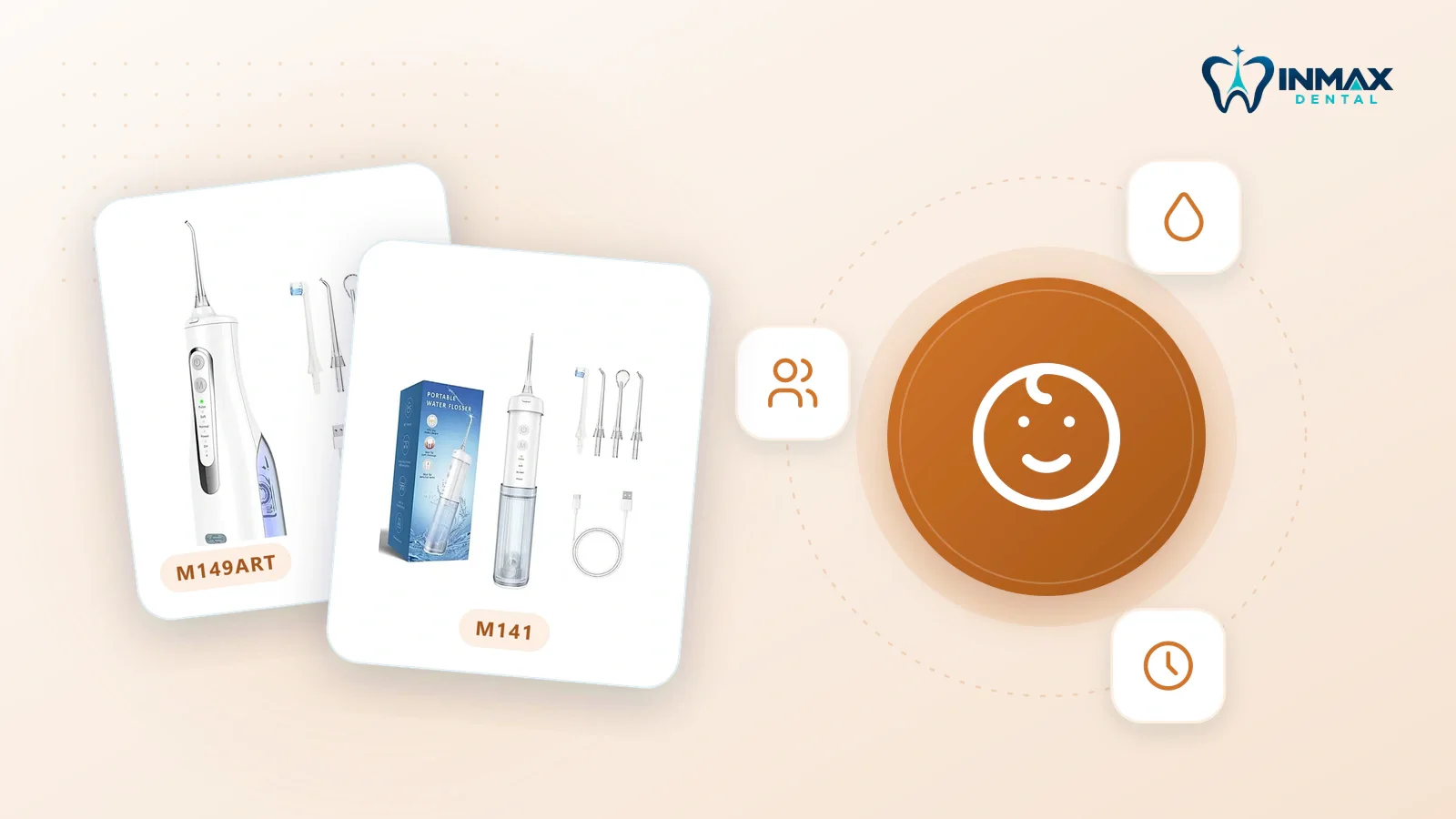
- M141: thân ngắn 157 mm, bình 210 ml trong suốt có gân, 4 chế độ Xung/Nhẹ/Thường/Mạnh, 40–130 PSI, chống nước IPX7 — gọn, dễ cầm.
- M149Art: áp lực khởi điểm 30 PSI (30–120 PSI), nhẹ hơn các mã M149 khác; 5 chế độ có chế độ Tùy chỉnh, đèn UV chiếu trong bình 300 ml.
Bạn có thể so sánh thông số các mã hoặc liên hệ Inmax để được tư vấn.
Câu hỏi thường gặp
Trẻ mấy tuổi dùng được máy tăm nước?
Chưa có mốc tuổi chính thức từ hiệp hội nha khoa hay nhi khoa. Hãy theo hướng dẫn của nhà sản xuất, hỏi nha sĩ, và chỉ cho trẻ dùng khi đã biết cúi bồn, khép hờ môi, có người lớn bên cạnh.
Máy tăm nước có thay được đánh răng cho trẻ không?
Không. Đánh răng 2 lần mỗi ngày với kem fluor đúng lượng vẫn là bước chính; máy tăm nước chỉ hỗ trợ làm sạch kẽ răng và viền nướu.
Nên đặt áp lực bao nhiêu cho trẻ?
Luôn bắt đầu ở mức thấp nhất và chỉ tăng khi nha sĩ đồng ý. Các mức PSI được giải thích trong bài áp lực máy tăm nước bao nhiêu PSI là phù hợp.
Chỉ nha khoa hay máy tăm nước cho trẻ em tốt hơn?
Nghiên cứu ở trẻ chưa thấy khác biệt rõ giữa chỉ nha khoa, bàn chải kẽ và máy tăm nước. Hãy chọn cách con dùng được đều đặn mỗi ngày, có người lớn hỗ trợ.
Bài viết mang tính tham khảo, tổng hợp từ các nguồn được dẫn link ở từng đoạn; không thay thế tư vấn, chẩn đoán và điều trị của bác sĩ hoặc nha sĩ trẻ em.
When children start losing baby teeth or get braces, many parents look into a water flosser for kids as a gentler way to clean between teeth than string floss. The most common question is: from what age? The honest answer is that there is no official age. This article explains why, what the research shows and how to help your child use one safely.
Water flosser for kids: is there an official age?
We searched parent materials from the American Academy of Pediatrics (AAP), the American Dental Association (ADA), the American Academy of Pediatric Dentistry (AAPD) and the UK NHS and found no age recommendation for water flossers. Ages printed on packaging usually come from manufacturers: for example, Waterpik presents one model for children aged 6 and up (Waterpik). So:
- Read each device's manual for age and usage guidance.
- Ask your dentist at check-ups whether your child needs interdental cleaning yet and which tool fits.
- Cooperation matters more than age: your child should be able to lean over the sink, keep lips half closed and not play with the jet.
When do children need to clean between their teeth?
- When two teeth touch: the AAP's HealthyChildren site advises starting to floss as soon as two teeth touch, and children usually need help until about age 10.
- From around age 3: Vinmec, a Vietnamese hospital group, recommends that children aged 3 and over add flossing for better cleaning (Vinmec, Vietnamese source).
- Mixed dentition (about ages 6–12): teeth close up, and the side surfaces a brush cannot reach easily trap plaque.
- Children with braces: brackets and wires hold food and need extra care.
For young children, the AAP notes that floss picks with a plastic handle may be easier for parents to use. A water flosser is an extra option, not a must.
What does research say about a water flosser for kids?
- George et al. (2025): 100 children aged 6–12 were split into 4 groups of 25 for 4 weeks. The water flosser and interdental brush groups reduced plaque significantly more than brushing alone; there was no significant difference between floss, interdental brush and water flosser. PubMed
- Deepika et al. (2022): 90 visually impaired children aged 8–16, followed for 28 days. Brushing plus a water flosser reduced plaque and gingivitis more than brushing plus floss or brushing alone. The authors suggest powered aids help children with limited dexterity. PubMed
- Sharma et al. (2008): 106 adolescents with fixed braces, 4 weeks. A water flosser with an orthodontic tip reduced plaque and gum bleeding more than floss or brushing alone. The study had an author linked to the manufacturer. PubMed
These studies are short, small and each took place at a single site. They suggest a water flosser is a reasonable interdental option for children, but not that it clearly beats floss or interdental brushes.
Brushing with fluoride toothpaste still comes first
- Twice a day, about 2 minutes: usually after breakfast and before bed (HealthyChildren).
- The right amount: under 3, a smear the size of a grain of rice; ages 3–6, a pea-sized amount (AAP).
- Spit, don't rinse: the NHS advises spitting after brushing and not rinsing with water so the fluoride keeps working.
- Supervision: children usually need help brushing until about age 8 (AAP); for children 7 and over, the NHS still suggests watching to make sure they brush properly.
If you are choosing a brush for your child, see electric toothbrushes for kids.
How to help your child use a water flosser safely
Only let your child use one if the device's manual allows it, after brushing, with clean lukewarm water. Four steps:
- An adult stands beside to guide: hold your child's hand the first few times and show how to move the tip along the gumline.
- Choose the lowest level: put the tip in the mouth before switching on; do not rush to increase the pressure.
- Lean close over the sink with lips half closed: so water drains into the basin instead of spraying out or being swallowed.
- Use for about 1 minute, then let the unit dry: empty leftover water, wipe it dry and store it out of reach.
You can practise leaning over the sink with a sip of water first: hold it, tilt the head down and let it flow out. Do not let children switch it on to play or aim the jet at eyes, ears or nose. If your child feels pain, bleeds a lot or is scared, stop and ask the dentist.
What about children with braces?
Children in braces need interdental tools the most, because floss is very hard to thread under the wire. Technique around brackets is covered in water flossers for braces and implants. Always follow your orthodontist's advice on tools and tips.
Water flosser picks from Inmax
The models below are not designed specifically for children, and Inmax's published specifications include no age recommendation. If your family wants a shared device and an adult always supervises the child, you may consider:
- M141: short 157 mm body, clear ribbed 210 ml tank, 4 modes (Pulse/Soft/Normal/Power), 40–130 PSI, IPX7 waterproof — compact and easy to hold.
- M149Art: starts at 30 PSI (30–120 PSI), gentler than other M149 models; 5 modes including Custom, and a UV light inside the 300 ml tank.
You can compare specifications or contact Inmax for advice.
Frequently asked questions
At what age can a child use a water flosser?
No dental or paediatric association has set an official age. Follow the manufacturer's guidance, ask your dentist, and only let your child use one once they can lean over the sink and keep lips half closed, with an adult nearby.
Can a water flosser replace brushing for children?
No. Brushing twice a day with the right amount of fluoride toothpaste is the main step; a water flosser only helps clean between teeth and along the gums.
What pressure should I use for a child?
Always start on the lowest level and only increase it if the dentist agrees. PSI levels are explained in what water flosser pressure is right.
Is floss or a water flosser better for kids?
Studies in children have not shown a clear difference between floss, interdental brushes and water flossers. Choose the method your child can use every day, with adult help.
This article is for general information, compiled from the sources linked in each section; it does not replace advice, diagnosis or treatment from a doctor or paediatric dentist.
孩子开始换牙或戴上牙套后,不少家长会了解儿童冲牙器,希望比牙线更温和地清洁牙缝。最常见的问题是:几岁可以用?老实说,目前没有官方年龄。本文说明原因、研究结果,以及如何让孩子安全使用。
儿童冲牙器有官方使用年龄吗?
我们查阅了美国儿科学会(AAP)、美国牙医协会(ADA)、美国儿童牙科学会(AAPD)和英国 NHS 面向家长的资料,都没有找到冲牙器的年龄建议。包装上的年龄通常来自厂家,例如 Waterpik 介绍其一款机型适合 6 岁及以上儿童(Waterpik)。因此:
- 仔细阅读每台机器说明书中关于年龄和用法的内容。
- 定期检查时询问牙医:孩子是否需要清洁牙缝、适合用什么工具。
- 孩子的配合程度比年龄更重要:要会俯身对着水池、半闭嘴唇,不拿水流玩耍。
孩子什么时候需要清洁牙缝?
- 两颗牙相互接触时:AAP 的 HealthyChildren 网站建议,一旦有两颗牙相互接触就开始用牙线;孩子通常到 10 岁左右都需要大人帮忙。
- 约 3 岁起:越南 Vinmec 医院建议 3 岁及以上的孩子配合使用牙线,清洁效果更好(Vinmec,越南来源)。
- 混合牙列期(约 6–12 岁):牙齿逐渐靠拢,牙刷难以触及的邻面容易残留菌斑。
- 戴牙套的孩子:托槽和弓丝容易卡食物,需要更仔细地清洁。
对于年幼的孩子,AAP 指出带塑料柄的牙线棒在家长帮忙时更容易使用。冲牙器只是额外的选择,并非必需。
关于儿童使用冲牙器,研究怎么说?
- George 等(2025):100 名 6–12 岁儿童分为 4 组(每组 25 人),为期 4 周。冲牙器组和牙间刷组的菌斑减少幅度明显大于单纯刷牙;牙线、牙间刷和冲牙器之间没有显著差异。PubMed
- Deepika 等(2022):90 名 8–16 岁视障儿童,随访 28 天。刷牙加冲牙器比刷牙加牙线或单纯刷牙更能减少菌斑和牙龈炎。作者认为电动工具有助于手部不够灵活的孩子。PubMed
- Sharma 等(2008):106 名戴固定矫治器的青少年,为期 4 周。配正畸喷头的冲牙器比牙线或单纯刷牙更能减少菌斑和牙龈出血。该研究有作者与厂家相关。PubMed
这些研究时间短、样本小,且各自只在一个地点进行。结果提示冲牙器是儿童清洁牙缝的合理选择之一,但不足以说明它明显优于牙线或牙间刷。
用含氟牙膏刷牙仍是首要任务
- 每天两次,每次约 2 分钟:通常在早餐后和睡前(HealthyChildren)。
- 牙膏用量要对:3 岁以下只用米粒大小的薄薄一层;3–6 岁用豌豆大小(AAP)。
- 吐掉,不要漱口:NHS 建议刷牙后吐掉泡沫,不要再用清水漱口,让氟持续发挥作用。
- 监督:孩子通常到 8 岁左右都需要大人帮忙刷牙(AAP);对 7 岁及以上的孩子,NHS 仍建议在旁观察,确认刷得正确。
如果正在为孩子挑牙刷,可阅读儿童电动牙刷。
如何让孩子安全使用冲牙器
只有在说明书允许时才让孩子使用,在刷牙后进行,使用干净的温水。四个步骤:
- 大人站在旁边指导:最初几次握着孩子的手,示范如何沿牙龈边缘移动喷头。
- 选最低档:先把喷头放进口中再开机,不急于加压。
- 俯身靠近洗手池并半闭嘴唇:让水流进水池,而不是喷出来或被咽下。
- 使用约 1 分钟后晾干机身:倒掉剩水,擦干,放在孩子够不到的地方。
可以先用一口水练习俯身:含住、低头、让水自然流出。不要让孩子自己开机玩耍,也不要把水流对准眼睛、耳朵或鼻子。如果孩子感到疼痛、出血较多或害怕,请停下来咨询牙医。
正在矫正牙齿的孩子呢?
戴牙套的孩子最需要牙缝清洁工具,因为牙线很难穿过弓丝下方。托槽周围的用法见正畸与种植牙人群如何用冲牙器。工具和喷头请始终遵从正畸医生的建议。
Inmax 冲牙器推荐
以下型号并非专为儿童设计,Inmax 公布的参数中也没有年龄建议。如果家庭想要一台共用的机器,并且孩子使用时始终有大人看护,可以参考:
- M141:机身短至 157 mm,带纹路的透明水箱 210 ml,脉冲/轻柔/标准/强力 4 种模式,40–130 PSI,IPX7 防水,小巧好握。
- M149Art:起始水压 30 PSI(30–120 PSI),比其他 M149 型号更轻柔;5 种模式含自定义模式,300 ml 水箱内有 UV 灯。
常见问题
孩子几岁可以用冲牙器?
目前没有牙科或儿科协会给出官方年龄。请遵循厂家说明并咨询牙医,等孩子会俯身对着水池、半闭嘴唇,并有大人在旁时再使用。
冲牙器能代替孩子刷牙吗?
不能。每天两次、用量正确的含氟牙膏刷牙才是主要步骤;冲牙器只是辅助清洁牙缝和牙龈边缘。
孩子用多大水压合适?
始终从最低档开始,只有在牙医同意后才调高。各档 PSI 的说明见冲牙器水压多少 PSI 合适。
对孩子来说,牙线和冲牙器哪个更好?
儿童研究尚未发现牙线、牙间刷和冲牙器之间有明显差异。请选择孩子每天都能坚持、并有大人协助的方法。
本文仅供参考,内容整理自各段落所附链接的资料,不能替代医生或儿童牙医的建议、诊断与治疗。
아이가 이를 갈기 시작하거나 교정 장치를 하면, 치실보다 부드럽게 치아 사이를 닦으려고 어린이 구강세정기를 알아보는 부모가 많습니다. 가장 흔한 질문은 몇 살부터 쓸 수 있느냐입니다. 솔직한 답은 공식 연령이 없다는 것입니다. 이 글에서는 그 이유와 연구 결과, 아이가 안전하게 쓰는 방법을 설명합니다.
어린이 구강세정기, 공식 사용 연령이 있을까?
미국소아과학회(AAP), 미국치과의사협회(ADA), 미국소아치과학회(AAPD), 영국 NHS의 보호자용 자료를 찾아봤지만 구강세정기 연령 권고는 없었습니다. 포장에 적힌 연령은 대개 제조사 기준입니다. 예를 들어 Waterpik은 한 모델을 6세 이상 어린이용으로 소개합니다(Waterpik). 따라서 다음을 지켜 주세요.
- 기기별 설명서에서 사용 연령과 방법을 꼼꼼히 확인합니다.
- 정기 검진 때 아이에게 치간 청소가 필요한지, 어떤 도구가 맞는지 치과의사에게 묻습니다.
- 나이보다 협조 정도가 중요합니다. 세면대에 몸을 숙이고 입술을 살짝 닫으며 물줄기로 장난치지 않아야 합니다.
아이는 언제부터 치아 사이를 닦아야 할까?
- 두 치아가 맞닿을 때: AAP의 HealthyChildren은 치아 두 개가 맞닿는 순간부터 치실을 시작하라고 권하며, 아이는 보통 10세 무렵까지 어른의 도움이 필요합니다.
- 3세 무렵부터: 베트남 Vinmec 병원은 3세 이상 아이에게 치실을 함께 쓰면 더 깨끗해진다고 권합니다(Vinmec, 베트남 자료).
- 혼합치열기(약 6~12세): 치아가 점점 촘촘해져 칫솔이 닿지 않는 옆면에 치태가 남기 쉽습니다.
- 교정 중인 아이: 브래킷과 와이어에 음식물이 끼므로 더 꼼꼼히 닦아야 합니다.
어린아이의 경우 AAP는 부모가 닦아 줄 때 플라스틱 손잡이가 달린 치실이 더 편할 수 있다고 설명합니다. 구강세정기는 추가 선택지일 뿐 필수는 아닙니다.
어린이 구강세정기, 연구 결과는?
- George 외(2025): 6~12세 어린이 100명을 4개 군(군당 25명)으로 나눠 4주간 관찰했습니다. 구강세정기군과 치간칫솔군은 칫솔질만 한 군보다 치태가 유의하게 더 줄었고, 치실·치간칫솔·구강세정기 사이에는 유의한 차이가 없었습니다. PubMed
- Deepika 외(2022): 8~16세 시각장애 아동 90명을 28일간 관찰했습니다. 칫솔질과 구강세정기를 함께 쓴 군이 칫솔질+치실군이나 칫솔질만 한 군보다 치태와 치은염이 더 줄었습니다. 연구진은 전동 도구가 손재주가 부족한 아이에게 도움이 된다고 봅니다. PubMed
- Sharma 외(2008): 고정식 교정 장치를 한 청소년 106명, 4주. 교정용 노즐을 단 구강세정기가 치실이나 칫솔질만 한 경우보다 치태와 잇몸 출혈을 더 줄였습니다. 제조사와 관련된 저자가 참여했습니다. PubMed
이 연구들은 기간이 짧고 표본이 작으며 각각 한 곳에서만 진행됐습니다. 구강세정기가 아이의 치간 청소에 합리적인 선택지라는 점은 시사하지만, 치실이나 치간칫솔보다 확실히 낫다고 말하기에는 부족합니다.
불소 치약으로 하는 칫솔질이 여전히 핵심
- 하루 두 번, 약 2분: 보통 아침 식사 후와 잠자기 전입니다(HealthyChildren).
- 알맞은 양: 3세 미만은 쌀알 크기로 얇게, 3~6세는 완두콩 크기입니다(AAP).
- 뱉고, 헹구지 않기: NHS는 칫솔질 후 거품을 뱉고 물로 헹구지 않아야 불소가 계속 작용한다고 권합니다.
- 지켜보기: 아이는 보통 8세 무렵까지 칫솔질 도움이 필요하며(AAP), NHS는 7세 이상이라도 제대로 닦는지 지켜보라고 권합니다.
아이 칫솔을 고르고 있다면 어린이 전동칫솔 글을 참고하세요.
아이가 구강세정기를 안전하게 쓰는 법
설명서에서 허용하는 경우에만, 칫솔질 후 깨끗한 미지근한 물로 사용하게 합니다. 4단계는 다음과 같습니다.
- 어른이 옆에서 안내하기: 처음 몇 번은 아이 손을 잡고 잇몸선을 따라 노즐을 움직이는 법을 보여 줍니다.
- 가장 낮은 단계 선택: 노즐을 입에 넣은 뒤 전원을 켜고, 서둘러 압력을 올리지 않습니다.
- 세면대에 바짝 숙이고 입술 살짝 닫기: 물이 밖으로 튀거나 삼켜지지 않고 세면대로 흘러내리게 합니다.
- 약 1분 사용 후 기기 말리기: 남은 물을 버리고 물기를 닦아 아이 손이 닿지 않는 곳에 둡니다.
먼저 물 한 모금으로 숙이는 연습을 할 수 있습니다. 머금고, 고개를 숙이고, 물이 저절로 흘러나오게 합니다. 아이가 혼자 켜서 장난치거나 눈·귀·코에 물줄기를 겨누지 않게 하세요. 아파하거나 피가 많이 나거나 무서워하면 멈추고 치과의사와 상담하세요.
교정 중인 아이라면?
교정 중인 아이는 치실을 와이어 아래로 넣기가 매우 어려워 치간 청소 도구가 가장 필요합니다. 브래킷 주변 사용법은 교정·임플란트 환자의 구강세정기 사용법에 정리되어 있습니다. 도구와 노즐은 항상 교정 치과의사의 안내를 따르세요.
Inmax 구강세정기 추천
아래 모델은 어린이 전용 제품이 아니며, Inmax가 공개한 사양에는 연령 권고가 없습니다. 가족이 함께 쓰고 아이가 쓸 때 항상 어른이 지켜본다면 참고할 수 있습니다.
- M141: 157mm의 짧은 본체, 결이 있는 투명 210ml 물통, 펄스/소프트/노멀/파워 4모드, 40–130 PSI, IPX7 방수로 작고 잡기 쉽습니다.
- M149Art: 시작 압력 30 PSI(30–120 PSI)로 다른 M149 모델보다 부드럽고, 사용자 설정을 포함한 5모드와 300ml 물통 안을 비추는 UV 램프가 있습니다.
사양 비교 또는 Inmax 문의로 상담받으실 수 있습니다.
자주 묻는 질문
아이는 몇 살부터 구강세정기를 쓸 수 있나요?
치과나 소아과 협회가 정한 공식 연령은 없습니다. 제조사 안내를 따르고 치과의사와 상담한 뒤, 아이가 세면대에 숙이고 입술을 살짝 닫을 수 있을 때 어른이 곁에 있는 상태에서 사용하게 하세요.
구강세정기가 아이의 칫솔질을 대신할 수 있나요?
아닙니다. 알맞은 양의 불소 치약으로 하루 두 번 닦는 것이 기본이며, 구강세정기는 치아 사이와 잇몸선 청소를 돕는 역할입니다.
아이에게는 어느 정도 압력이 적당한가요?
항상 가장 낮은 단계로 시작하고, 치과의사가 동의할 때만 올리세요. PSI 단계는 구강세정기 적정 압력은 몇 PSI일까에서 설명합니다.
아이에게는 치실과 구강세정기 중 무엇이 더 좋나요?
어린이 연구에서는 치실, 치간칫솔, 구강세정기 사이에 뚜렷한 차이가 확인되지 않았습니다. 아이가 어른의 도움을 받아 매일 꾸준히 할 수 있는 방법을 고르세요.
이 글은 일반 정보 제공용으로, 각 단락에 링크된 자료를 정리한 것이며 의사나 소아치과의사의 상담·진단·치료를 대신하지 않습니다.